
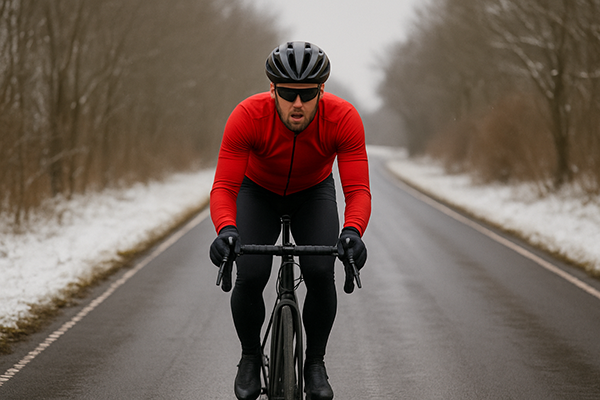
For many cyclists, the off-season can be a tricky time. The weather turns, daylight hours shrink, and motivation dips. Events are months away, and those long summer rides start to feel like a distant memory.
But here’s the truth: what you do now shapes how you perform next season.
Winter isn’t a break — it’s a building phase. It’s when strong riders become faster, more efficient, and more resilient.
And the best part? You don’t need to train more — you just need to train smarter.
This guide breaks down how to use the colder months to reset your body, refine your training, and lay the foundations for your best season yet.
1. Shift Your Mindset — From Performance to Progress
Summer riding is all about chasing numbers: power, speed, KOMs, and race results. Winter is different — it’s about building the engine, not testing it.
Think of it like this:
– Summer: Output-focused (what can I do?)
– Winter: Input-focused (how can I improve?)
This shift allows you to ease the pressure, slow things down, and work on areas often neglected during race season — technique, base endurance, strength, and recovery.
Ask yourself:
“What would make me a stronger, more complete rider next year?”
Your off-season plan should be built around that answer.
2. Rebuild Your Aerobic Base
Your aerobic base is the foundation for endurance — the engine room for everything from long rides to high-intensity intervals.
Winter is the ideal time to rebuild it. That means slower rides, steady zones, and consistent volume — even if it feels too easy at times.
How to do it:
– Spend 70–80% of your training time in Zone 2
– Include 1–2 higher-intensity sessions per week (e.g. tempo or sweetspot)
– Keep long rides genuinely aerobic — avoid drifting into threshold
This builds endurance and creates the fitness depth that makes next season’s intervals more effective.
3. Use Indoor Training with Purpose
Turbo trainers have become essential winter tools. Platforms like Zwift, TrainerRoad, and Wahoo RGT make indoor training more engaging — but they can be misused.
Too many riders turn every session into a race or FTP test. Fun in the moment, but mentally and physically draining.
A smarter approach:
– Use short, focused interval sessions (45–75 minutes)
– Mix in endurance blocks to simulate outdoor base work
– Track heart rate and power trends to measure adaptation
Indoor training should complement outdoor rides — not replace them.
4. Build Strength Off the Bike
If you only ride, you’re only training one movement pattern. Over time, this creates muscular imbalances — especially in the hips, glutes, and core — which can limit power and increase injury risk.
Winter is your chance to fix that.
Off-bike strength plan:
– Core stability: planks, dead bugs, bird dogs (2–3x/week)
– Glute activation: bridges, hip thrusts, step-ups
– Leg strength: squats, lunges, deadlifts (start bodyweight, progress gradually)
– Mobility: 5–10 minutes stretching post-ride
Strength work isn’t about bulking up — it’s about control, stability, and injury prevention.
5. Recover Like It’s Part of the Plan
Recovery isn’t a reward — it’s where the adaptation happens.
When volume drops in winter, some riders fill the gap with more training. The result? Plateau.
Prioritise recovery:
– Sleep 7–9 hours per night
– Eat to match your energy output
– Take one full rest day each week
– Include a lighter week every 3–4 weeks
You don’t get stronger from training — you get stronger from recovering after training.
6. Track Progress the Right Way
Winter progress isn’t about chasing new FTP numbers. It’s about feeling fresher, smoother, and more efficient.
What to track:
– Heart rate vs. power: lower HR for same watts = aerobic improvement
– Cadence control: holding preferred cadence comfortably
– Session consistency: fewer missed sessions = better adaptation
Some weeks will feel slow — and that’s okay. You’re building quietly, not burning brightly.
7. Add Variety to Stay Motivated
Repeating the same loops or sessions can drain enthusiasm. Mix things up:
– Explore gravel or off-road routes
– Join group winter rides
– Set a new route or charity distance goal
– Train with others online or via your coach
Winter is long — variety keeps it sustainable.
8. Nutrition: Fuel the Work, Not the Weather
Cold weather can suppress appetite, but your body still needs energy to stay warm and recover. Under-fuelling in winter is a common performance killer.
Keep it simple:
– Eat carbs before and during longer sessions
– Prioritise protein after every ride
– Stay hydrated — cold air still causes sweat loss
You don’t need race-day fuelling, but you do need consistency.
9. Reflect and Reset
Winter is also the time to assess what worked — and what didn’t — last season.
Ask yourself:
– Did I fade in long races?
– Struggle to recover between sessions?
– Was pacing or consistency a weak point?
Once you know your limiters, you can build a plan to target them — and that’s where structured coaching makes the difference.
10. From Training Harder to Training Smarter
“More” isn’t always better. Smarter training is about balance — knowing when to push, when to rest, and how to connect every ride to your long-term goals.
When you use the off-season to focus on aerobic fitness, strength, recovery, and nutrition, you’re building more than just fitness — you’re building resilience.
Come spring, the difference between you and the rider who “just kept riding” will be clear.
Key Takeaways
– Shift focus from performance to progress
– Spend most of winter in low-intensity, aerobic zones
– Add structured indoor sessions, not random efforts
– Strength and mobility off the bike are game-changers
– Recovery drives adaptation — not just volume
– Eat to support training, even when mileage is lower
– Track trends, not single numbers
Ready to take your training up a gear?Don’t just survive winter — use it to set up your best season yet.
Our personalised coaching plans give you structure, purpose, and accountability — so every session counts.